Multiple missing teeth
Patients missing most or all teeth in an arch who are seeking a fixed or removable implant-supported option.

Full-arch rehabilitation
A coordinated implant and restorative approach for selected patients with extensive tooth loss or severely compromised teeth.
What the term means
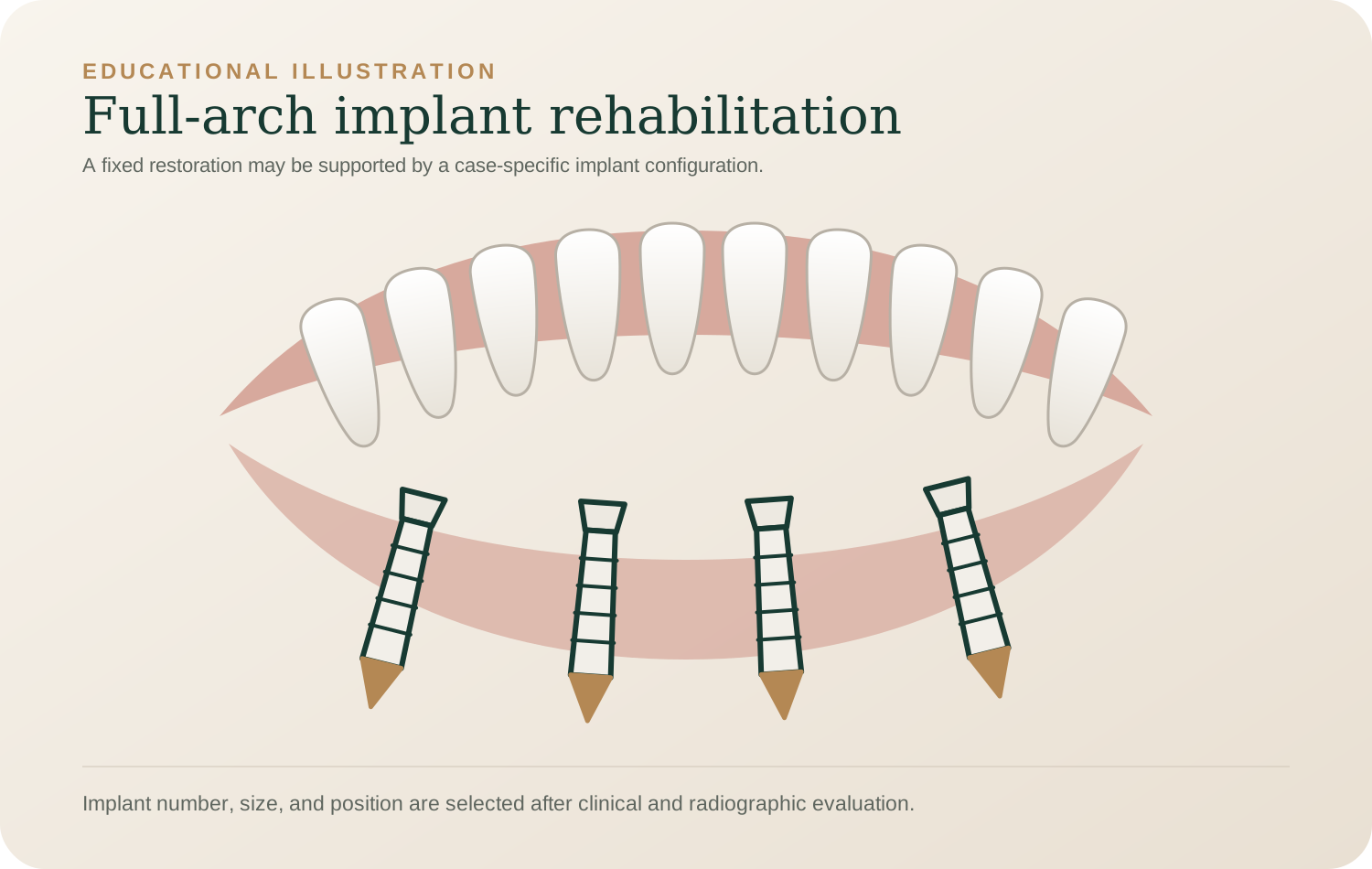
All-on-X generally refers to a fixed full-arch restoration supported by a case-specific number of dental implants. The “X” recognizes that implant number, size, distribution, and angulation depend on the patient’s anatomy and restorative requirements.
The plan may involve removal of teeth, bone reshaping, grafting, implant placement, a provisional phase, and later delivery of a definitive restoration. Not every patient requires or qualifies for each step.
Candidates
Patients missing most or all teeth in an arch who are seeking a fixed or removable implant-supported option.
Patients with extensive decay, fracture, periodontal breakdown, or restorative failure when individual tooth treatment may not be predictable.
Denture wearers seeking improved retention or a fixed option, subject to anatomy, health, expectations, and maintenance capacity.
These descriptions do not establish candidacy. Preserving natural teeth may be the preferred plan when clinically appropriate.
The treatment pathway
Clinical findings, imaging, health history, current teeth or prostheses, bite, smile display, and patient priorities are reviewed.
Potential tooth position, restorative space, implant distribution, materials, and provisional strategy are considered together.
When appropriate, implants and a provisional prosthesis may be delivered in a coordinated sequence. Immediate loading is conditional, not guaranteed.
The final prosthesis is completed after the clinical requirements of the accepted plan are met.
Professional follow-up, hygiene, prosthetic evaluation, and daily cleaning are necessary parts of treatment.
Important limitation
Some patients may qualify for a fixed provisional restoration on or near the day of surgery. The decision depends on primary stability, anatomy, bite, medical and dental factors, and intraoperative findings.
If immediate loading is not appropriate, Dr. Moini may recommend a different provisional option or a staged approach.
The temporary phase is not the final result. Healing, tissue changes, bite evaluation, hygiene access, esthetics, and material selection are considered before the definitive prosthesis is delivered.
Full-arch treatment is extensive and may involve surgical, prosthetic, functional, and esthetic limitations. Risks can include infection, bleeding, swelling, altered sensation, implant failure, bone or tissue loss, prosthetic fracture or wear, speech or hygiene adaptation, food entrapment, esthetic compromise, need for repair, and additional procedures.
No website, photograph, digital simulation, or prior patient result can guarantee an individual outcome.
Smile Aesthetics and Implant Dentistry
Schedule an examination with Dr. Moini to review whether full-arch care is appropriate, what alternatives exist, and what the treatment sequence may involve.